
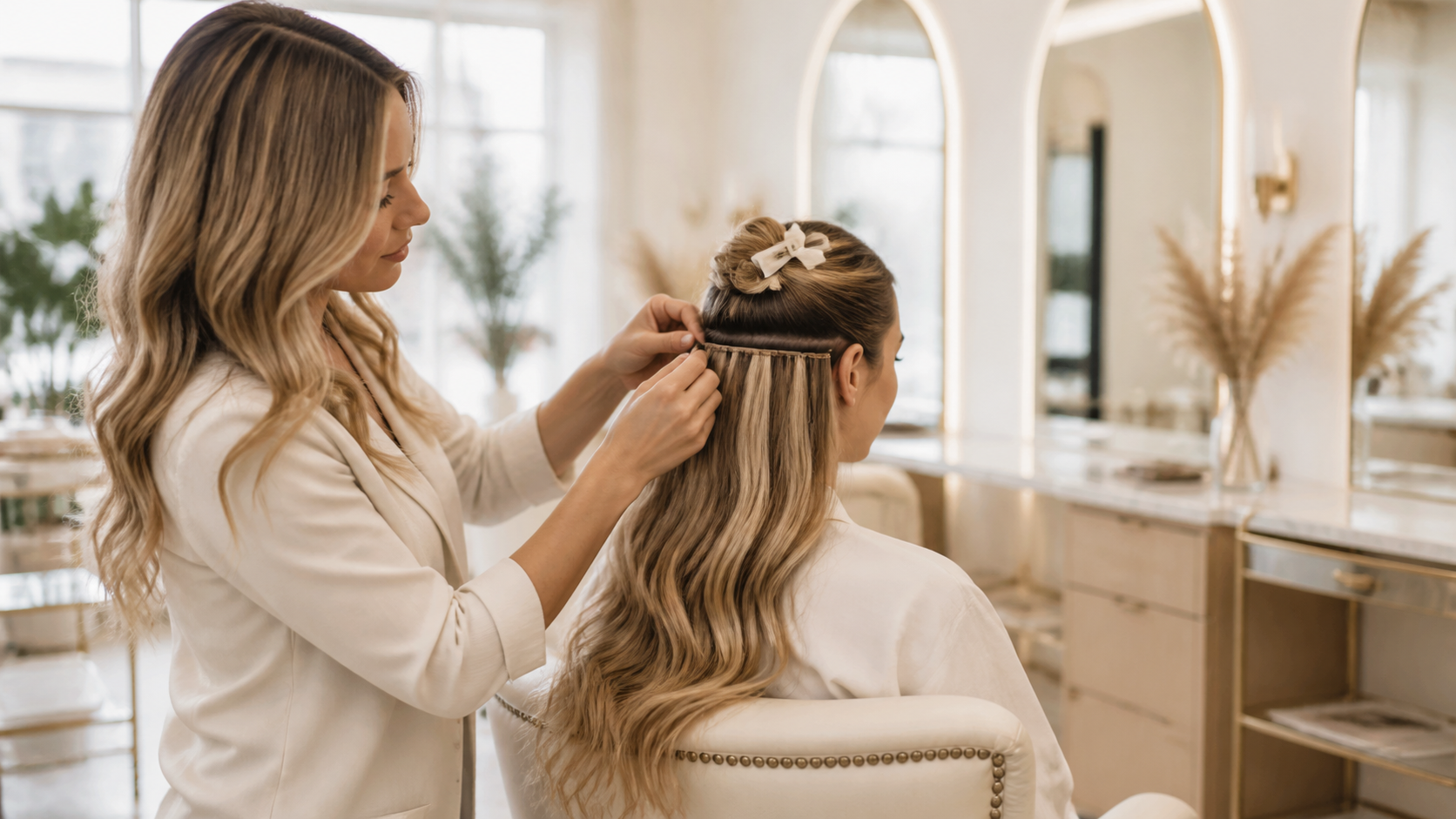
Private label hair extensions allow a salon, distributor or entrepreneur to sell a curated extension range under its own brand while a manufacturer produces and packs goods to an agreed specification. A successful launch connects product range, customer promise, operational specification and reorder plan.
Define what private label means for your launch
Private-label scope can range from standard product in branded outer packaging to a customised program involving selected colours, pack configuration, labels, inserts and packaging components. Each added variable affects approvals, lead time and MOQ. Choose the level of differentiation that is commercially useful.
Build a focused first collection
A large shade ring looks comprehensive, but it ties cash into slow-moving combinations of length, colour and method. Begin with the methods that match existing installation expertise and select a core range based on actual sales conversations. Use a physical or approved colour reference, but do not present a screen image as an exact colour guarantee.
Understand MOQ before you design packaging
MOQ is not one number. Manufacturers may have one minimum for a standard product SKU, another for a specific colour or texture and a third for custom printed packaging. Ask whether each minimum is measured by SKU, colour, total order or packaging run. A phased approach lets a brand validate demand before a more complex custom program.
Create packaging that supports professional use
Packaging should protect hair in transit, identify method, length, colour and net weight, and make stock handling easier. Confirm print size, colours, placement, label material, barcode readability and carton markings before production. Review a digital proof and, where possible, a physical packaging sample.
Sample the product and packaging together
Test a packaged sample when possible. Assess product application, customer experience and operations: how the pack opens, protects the hair, communicates the SKU and fits the carton. Factory testing and shipment inspection should refer to the approved sample and artwork.
Plan an approval path that avoids delays
Approve product specification and sample; approve colour references and SKU naming; approve packaging artwork and print proof; confirm the purchase order and schedule; then review pre-shipment inspection evidence. Update the written specification whenever feedback changes a colour, weight or packaging material.
Create a reorder system from day one
Track sell-through by method, length and colour. Keep a batch and colour record for each shipment. Begin reorder planning before stock is exhausted, confirming lead times, material availability and packaging minimums.
FAQ
What is a realistic first private-label order?
There is no universal quantity. It depends on methods, colours, lengths, packaging level and sales channel. A focused launch with fewer validated SKUs is often safer than a broad range with little depth per SKU.
Can I use my own logo and packaging design?
Yes, subject to factory capabilities, file requirements and relevant MOQs. Confirm ownership of artwork, proof approval and print specification in writing.
Conclusion
Private label works best when product, packaging and operations are planned together. Start with a range your customers can understand and your business can replenish. Use samples, written approvals and shipment inspection to turn a brand concept into a repeatable supply program.