
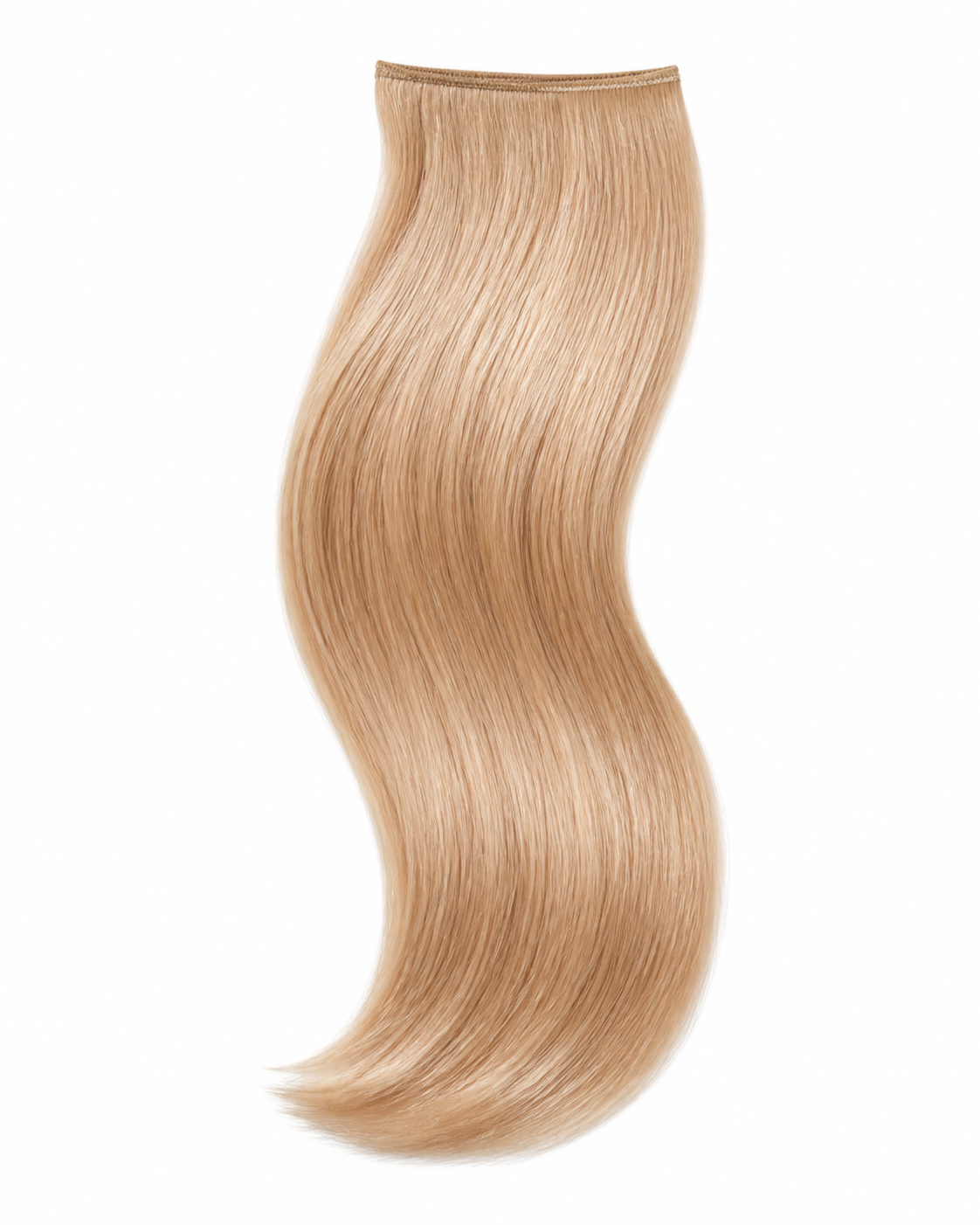
“Genius Weft vs hand-tied weft” is often asked as though one method automatically replaces the other. For professional buyers, the better question is which construction fits the installation method, client profile, inventory plan and technical expectations of the business.
The short answer
Choose a Genius Weft when the salon or distribution program needs a very thin, low-profile, cuttable weft with a reinforced edge and flexible sizing at installation. Choose hand-tied weft when the method and client preference call for a traditionally tied, very light track and installers are comfortable working within its cutting limitations.
How the constructions differ
Hand-tied wefts secure smaller hair bundles to a thread base. This creates a light, flexible track, but the tied construction means the installer should treat the cut edge carefully. Genius Wefts use a fine, reinforced machine-made edge designed to retain a thin profile while providing more cutting flexibility. Exact seam thickness and cut behaviour vary by product, so request a close-up sample and the factory’s written handling guidance.
A comparison for purchasing teams
Genius Weft
Typically selected for low-profile installation planning, adaptable width and a reinforced edge. Ask how the exact sample lays after a row installation and what cutting method is approved.
Hand-Tied Weft
Typically selected for a light, traditional tied construction and a stylist’s established sewing technique. Confirm how widths should be planned and handled at installation.
Which clients and services does each method support?
For fine hair, a stylist may prioritise a low-profile edge and controlled weight distribution. For significant volume, a different pack configuration may be needed. A distributor serving several extension educators may need to stock both methods rather than force one solution across every technique.
How to sample both methods fairly
Ask an experienced extension professional to install comparable lengths, texture and colour family using the method they are trained to perform. Record net product weight, number of rows, time required and adjustments at the cut or seam. At maintenance, review weft condition, colour behaviour, client comfort and adherence to aftercare.
Inventory implications for wholesalers
Begin with a small range of proven lengths and shades, clearly labelled packs and a colour reference sales teams can use consistently. Define net hair weight, intended application and expected end density for each SKU. Keep an approved sample or physical swatch for future shipment inspections.
FAQ
Is Genius Weft always better than hand-tied weft?
No. Genius Weft may be stronger where cuttable width and a reinforced thin edge are priorities. Hand-tied weft may suit a stylist’s established technique or a specific service design. Test both in the intended application.
Can all Genius Wefts be cut anywhere?
Do not assume so. Follow the manufacturer’s handling instructions for the exact product and confirm whether sealing or a specific cutting position is required.
Conclusion
Genius and hand-tied wefts should be bought as part of a service system, not as marketing labels. A controlled sample installation, written specification and modest initial SKU plan will reveal which method fits your customers and salon partners.